I walked into a franchise toy store in suburban Melbourne last October and saw something new. An entire bay of pedal-free bikes sat beside a wall of tiny helmets.
The store manager told me pedal-free bikes were outselling tricycles three to one. There were no batteries, no assembly complaints, and parents kept coming back for helmets and knee pads.
That is family retail trends shifting in real time.
Australia’s 24-hour movement guidelines recommend zero screen time for children under two. For ages two to five, the limit is no more than one hour a day.
Parents are looking for active play options, and retailers that stock them are gaining from it. Circana reported that all twelve tracked toy markets, including Australia, grew year over year in the first half of 2025, which points to fresh demand in outdoor play.
For toy retailers, pedal-free bikes solve several problems at once. They support active play, avoid battery-related rules, and create natural add-on sales with helmets and pads.
Stores that lock in fit charts, demo dates, and reorder points before spring can turn one compact bay into steady revenue by Christmas 2026.
Key Takeaways
These bikes earn their floor space when stores treat them as a complete riding system and manage the category with discipline.
- Treat the category as a system, not a single SKU. Bike plus helmet plus fit plus demo plus follow-up is what lifts basket size and repeat visits across a franchise network.
- Build a three-tier range. Entry, mid, and premium models with clear age-fit and feature steps give parents an obvious upgrade path and protect margin.
- Run monthly demos from August through November. Learn-to-ride events move stock earlier, which matters now that Black Friday pulls spending into November.
- Merchandise helmets beside bikes. The ACCC’s 2024 helmet standard update expanded compliance options, so trained staff can sell with more confidence.
- Minimise compliance risk. Non-electronic ride-ons for under-threes sidestep the tightened 2023 toy safety standard and button-battery rules, which reduces recall exposure.
- Track a short KPI set. Helmet attachment of at least one per bike and stock turns under forty-five days in November and December show whether the category is working.
What Is the Balance Bike Boom?
The boom matters because it joins child development, parent demand, and retail simplicity in one easy-to-explain product.
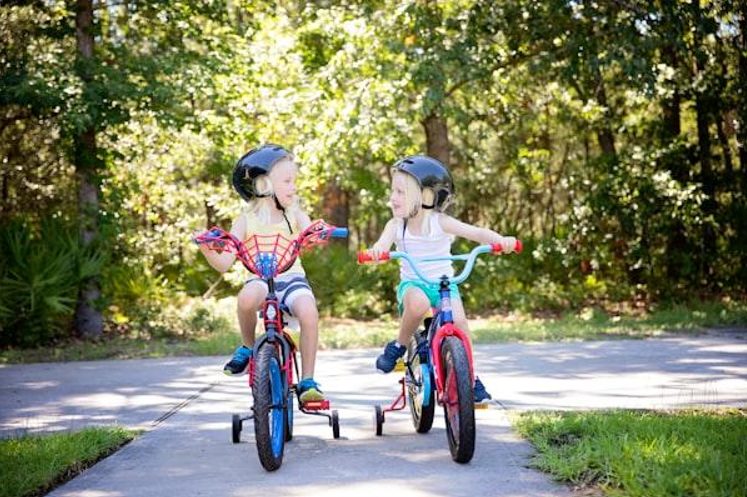
A balance bike is a pedal-free, foot-propelled bicycle designed for children as young as eighteen months. The child sits, scoots, glides, and learns to balance before ever touching a pedal.
The boom comes from three forces meeting at once. Parents want early movement skills, retailers want safer and easier-to-demo products, and Australian safety rules make non-electronic active toys simpler to range.
Research supports the shift. A 2022 open-access review in the International Journal of Environmental Research and Public Health found that balance-first learning pathways lead to faster transitions to independent riding than training wheels.
A separate 2022 study in the British Journal of Developmental Psychology found that children who practised with these bikes started younger, practised for less time, and achieved independent cycling earlier than children using training wheels.
For franchise operators, that means a category backed by evidence, shaped by parent demand, and easier to manage than most electronic ride-ons. It also gives staff a simple explanation that parents can repeat to grandparents before a birthday or Christmas purchase.
What Is Driving Australia’s Balance Bike Momentum?
Three forces are pushing this category forward for families and retailers at the same time.
1. Health and Development Drive Sales
Australia’s movement guidelines give staff a ready-made script. When parents hear that young children need plenty of daily physical activity and very little screen time, a balance bike becomes an easy gift choice. The message is simple, a balance bike helps a child move, steer, and build confidence outside.
2. Compliance and Risk Reduction
The Consumer Goods (Toys for Children up to and including 36 Months of Age) Safety Standard 2023 tightened battery-compartment security and small-parts testing. Its eighteen-month transition ended on 4 March 2025. The button-battery mandatory safety standard applies to all consumer goods supplied on or after 22 June 2022 and requires designs that prevent battery release during use or misuse.
Simple, non-electronic models avoid both layers, which lowers compliance work and reduces recall exposure. That does not remove all safety checks, but it does make ranging and staff training much easier.
3. Stronger Merchandising Returns
Demo ability drives conversion. A child gliding a few metres across the floor sells the bike faster than a shelf talker ever will. Accessories such as helmets, bells, and pads also lift average order value with very little extra staff time.
ABS analysis confirms that Black Friday has pulled spending into November and weakened January’s seasonal peak. That earlier rush matters when floor space is tight and holiday cash is already committed elsewhere.
What Should You Stock?
A strong range makes choice easy for parents and fitting quick for staff.
Range structure and vendor strategy. Stock twelve-inch models for children from about eighteen months to four years. Add fourteen-inch convertible balance-to-pedal options for taller three-to-six-year-olds. If you do not already have an entry, mid, and premium ladder, benchmark model specs and margins against an Australian specialist such as Ride Ons. Then feature a curated row of balance bikes and place an AS/NZS-compliant kids helmet beside them to lift basket size.
Entry tier usually means EVA tyres and no brake. Mid tier adds pneumatic tyres and a footrest. Premium tier should bring a lighter frame, a micro-reach rear brake, and a tool-free seatpost.
Weight and materials. Parents may not ask about frame weight directly, but they notice how easily a child can control the bike. A lighter frame helps the rider steer, catch wobbles, and stop with less frustration. If two models look similar on the shelf, the lighter one is usually easier to demonstrate and easier to justify at a higher price.
Materials by store role. Wooden frames photograph well and support an eco-led gift story. Alloy and steel deliver durability and better hand-me-down value. Magnesium or thermoplastic frames reduce weight for smaller riders. If space is tight, show one clear material story per tier instead of every possible frame type, because too much choice slows the sale.
Safety-first spec. For models with handbrakes, make sure the levers fit small hands. Position helmets right beside the bikes and reference the 2024 helmet standard options in staff training. In March 2024 the ACCC made the Consumer Goods (Bicycle Helmets) Safety Standard 2024, which expanded acceptable compliance options with an eighteen-month transition period.
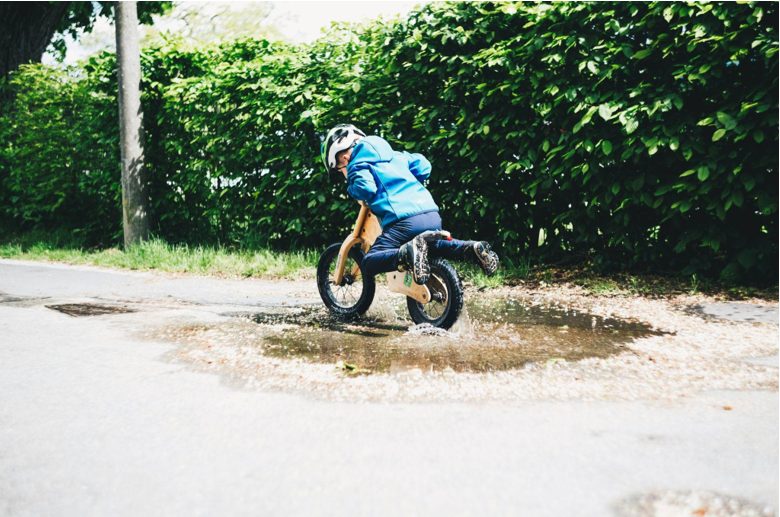
Fit in seconds. Stock multiple seatpost lengths with quick-release clamps. Add an inseam-to-saddle-height chart on the shelf. Train staff to set saddle height at roughly two to three centimetres below the child’s inseam for a stable first ride. The common objection is lifespan, so staff should also point to seat range, tyre quality, and the chance that a younger sibling will use the bike next.
Attachment strategy. Target one helmet per bike sold. Bundle helmets, bells, knee pads, and reflective stickers. Bundle pricing makes the add-on feel standard instead of optional, which is exactly how safety gear should be presented.
How Should You Merchandise the Category?
The category sells best when it is obvious, easy to test, and clearly linked to safety.
Bay design. Allocate about a 1.2-metre bay with premium models on the top shelf, core twelve-inch bikes at mid-height, and boxed stock on the bottom. Place the helmet bay immediately to the left and organise sizes by head circumference. Keep one bike set to the lowest saddle height and one set at a mid setting so staff can fit different children quickly.
Demo space. Designate a two-by-three-metre mini track with cones. Staff should show the glide, stop, and smile sequence in under sixty seconds. Parents need very little extra persuasion once they see their child balance on the bike. If you worry about marked floors or blocked aisles, a taped lane, a slow-speed rule, and a staff-led queue usually solve it.
Signage. Use a simple three-step graphic that shows the path from toddle to pedal. Add a QR code that leads to a size chart and a short FAQ page. Good signage reduces basic questions and frees staff to focus on fit and closing the sale.
Compliance cues. Attach a small tag near helmets that reminds families that helmets are mandatory when riding in public places. NSW Road Rules 2014, rule 256(1), requires bicycle riders to wear an approved helmet that is securely fitted and fastened. Include that reference in staff notes so the team can answer calmly and accurately.
Where Should You Market to Australian Parents?
Local visibility matters more than broad reach when the product is age-specific and strongly driven by trust.
Community channels. Post event notices in local parenting Facebook groups, community boards, and school newsletters. Tie in with AusCycling participation initiatives when it makes sense. Local parents tend to trust nearby recommendations more than polished brand ads, especially for preschool gear.
Trusted media. Offer expert comments to local journalists on helmet fit, first-ride setup, and active play linked to national guidelines. This positions the store manager as a useful local authority instead of just another retailer with a sale sign.
User-generated content. Encourage short parent videos of first glides and first stops. Provide a safe filming corner at demo events. Ask permission before reposting and offer a simple backdrop so clips look clean and consistent across the network. Seed reviews with fit, age, and height details, because that practical context helps the next parent buy faster.
Social platforms. Use Instagram Reels for live demo moments, YouTube Shorts for quick fit tips, and franchise-wide posts to announce event dates. Keep the message specific, screen-free play, easy first rides, and safer setup with the right helmet.
When Should You Push Spring to Christmas Sales?
The category needs an early run-up because seasonal spending now starts sooner than it used to.
July to August. Hold a buyer clinic. Confirm the three-tier range, bundle rules, and staff talking points. Order helmets, signage, and demo cones. Use this period to standardise model names and pricing logic across stores so parent messaging stays consistent.
September. Launch a landing page and publish local event dates. Capture RSVPs through email and social posts. Test subject lines around first rides, screen-free play, and birthday gifting so you know which message pulls best before the busiest weeks arrive.
October. Run the first two demo Saturdays. Measure helmet attachment, average basket size, and same-day unit sales. Pull forward stock to cover November demand. If weather turns wet, move the demo indoors and keep the date, because regular events matter more than perfect sunshine.
November. Run your heaviest marketing around Black Friday and Cyber Monday. Aim to clear at least forty-five percent of seasonal volume before December. Add bundle offers. Reserve buy now, pay later promotions for mid and premium tiers to protect margin, since RBA data notes transactions grew about thirteen percent in 2022-23 to roughly nineteen billion dollars and merchant fees average about four percent per transaction.
December. Activate a gift-wrap station and extend pickup hours. Push last-minute helmet-plus-bell add-ons. Offer click-and-collect with a helmet fit at pickup, because service at handover builds trust and reduces returns from rushed holiday purchases.
How Should You Track Success?
A short, disciplined scorecard tells you faster than instinct whether the category deserves more space.
A short list of key performance indicators, or KPIs, tells you more than a crowded dashboard. Keep the measures store-level, visible, and easy for managers to act on each week.
Event-to-sale correlation. Track demo RSVPs and footfall lift, then compare them with same-day unit sales and helmet attachment. AIHW reports that in 2021-22 cycling accounted for sixteen percent of sport and exercise related injury hospitalisations among children and adolescents, which makes helmets both a safety priority and a clear retail metric. Also record who attended a demo but did not buy, then send a short sizing follow-up within twenty-four hours.
Stock turns. Target fewer than forty-five days in November and December. Faster turns support cash flow and reduce post-Christmas markdown risk. If one store runs slow, review colour mix and size fit before cutting units, because the issue may be presentation rather than demand.
Attachment rate. Aim for at least one helmet per bike. If results fall short, revisit bundle pricing, shelf placement, and staff scripts. A store can miss a unit target and still have a healthy category if accessory attachment protects the margin.
Demand signals. Run a weekly staff tally of children who try a bike that feels too small or too big. Use those notes to refine the size curve before reorders. Monitor local parent-group mentions of your event name and first-ride videos as qualitative proof that your demos are building awareness.
How Can Your Network Turn This Boom Into Profit?
A repeatable store process is what turns a trend into reliable revenue across a network.
These bikes are not a short-lived fad. They are an evidence-backed, demo-ready, and compliance-friendly category that can convert a modest footprint into steady seasonal sales.
Network-level consistency matters. Parents should see the same fit process, the same safety message, and the same bundle logic in every store. Codify an SOP that covers range selection, merchandising layout, demo flow, post-purchase SMS sequences, and weekly KPI reviews.
Share your best demo clips across franchisees through short video updates. Refresh graphics by season and feature taller fourteen-inch convertibles in January skill-building campaigns to keep momentum after Christmas. The retailers that treat the category as a system, not a seasonal impulse purchase, will capture more value from Australia’s family retail trends.
FAQ
The most useful questions usually come back to fit, safety, timing, and how quickly children progress.
What Age Is Right for a Balance Bike?
Most children start confidently between eighteen months and three years. Fit by inseam and confidence level rather than age alone. A properly sized saddle usually sits about two to three centimetres below the child’s inseam so both feet rest flat on the ground.
Do Kids Need Helmets on Pedal-Free Bikes?
If they are riding in any public space, yes. Australian road rules require bicycle riders to wear an approved helmet that is securely fitted and fastened. Treat helmets as non-negotiable in store messaging and staff scripts.
How Fast Will a Child Move to a Pedal Bike?
Research shows that children who practise on these bikes tend to achieve independent cycling earlier and with less practice time than children using training wheels. Individual timelines still vary, so staff should frame the benefit as a smoother learning path, not a fixed deadline.
Are Brakes Necessary on a Balance Bike?
For confident riders aged three and older, especially on hilly ground, a rear handbrake with a child-sized lever gives better control. Younger toddlers usually learn foot braking first and do not need a handbrake straight away.
Why Should Retailers Prioritise Pedal-Free Bikes Over Training Wheels?
These bikes teach balance first, which is the hardest part of learning to ride. Pedalling is easy to add once balance feels natural. That evidence-backed difference gives staff a clear and credible selling point for informed parents.
When Should We Market Hardest?
Start in September, then peak in November with strong inventory support and regular demos. ABS data shows that Black Friday has pulled spending forward, so retailers that start early usually capture more pre-Christmas demand.