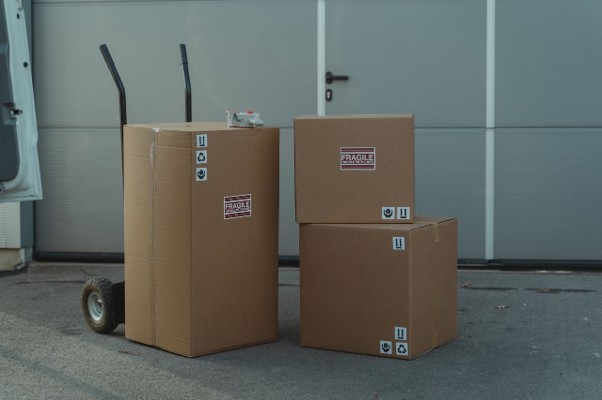
Every business that operates across more than one site eventually hits the same quiet problem. Stock goes missing between locations. A tool leaves one site and never quite makes it to the next. A delivery is signed for somewhere, and then nobody can say where it ended up. None of it looks dramatic in isolation. It just adds up.
For a single-site operation, this kind of thing is usually easy to catch. Someone notices, asks around, finds the answer within the hour. Multiply that across five, ten or fifty locations, and the same small gaps in visibility become a genuine operational cost, one that's rarely tracked as its own line item, which is exactly why it tends to go unaddressed for so long.
Why Visibility Gets Harder as You Grow
Growth changes how stock and equipment move through a business. A single site has one stockroom, one set of eyes, one team who broadly knows where everything is. A multi-site network has none of that built in. Items move between locations, between staff, between vehicles, often without anyone formally recording the handover.
It isn't a failure of process, exactly. It's just that the informal tracking methods that worked fine at a smaller scale, a shared spreadsheet, a chat to the site manager, a mental note, were never designed to hold up once the number of moving parts multiplied. They quietly stop working, and nobody notices until something goes missing.
What Actually Goes Missing, and Why It's Hard to Spot
The items that disappear across multi-site operations tend to be unglamorous. Shared tools that get left behind after a job. Stock that's transferred between locations but never formally logged as received. Equipment that's on loan to one site and simply never comes back. Often, it's not theft at all. It's simply drift, the natural result of things moving faster than the paperwork tracking them.
The trouble is that these losses rarely show up as a single, obvious event. They accumulate in the background, showing up eventually as a stocktake discrepancy, a re-ordered tool nobody can explain, or a customer asking where their delivery went. By the time anyone notices the pattern, the individual instances are long gone, and so is any real chance of tracing them.
The Real Cost Goes Beyond the Item Itself
Replacing a missing tool or reordering lost stock is the most visible cost, but it's rarely the biggest one. Someone has to notice it's gone, ask around, chase up the answer, and eventually give up and reorder. That's admin time spent on a problem that shouldn't need solving manually in the first place.
There's a customer-facing cost too. When a delivery can't be accounted for, or a job is delayed because the right equipment isn't where it should be, the person dealing with the fallout is usually front-of-house staff who had nothing to do with the original mix-up. Multiplied across a growing network, this kind of friction becomes a genuine drag on how smoothly the business runs, even if no single incident looks serious on its own.
Manual Tracking Doesn't Scale With the Business
Spreadsheets and verbal handovers work when there are a handful of people and a handful of items to keep track of. They stop working the moment a business adds more sites, more staff, and more stock moving between them. The problem isn't that people aren't trying. It's that manual tracking depends on everyone remembering to log every movement, every time, without fail, and that's not a realistic standard to hold an entire network to.
What multi-site businesses actually need is a way to reduce the risk of losing track of things without relying on someone remembering to write it down. That's a technology problem, not a people problem, and it's worth treating it as one.
Where Tracking Technology Fits In
For businesses that need more visibility without adding another manual process, tracking stickers offer one practical option. Rather than relying on manual logs, a small sticker GPS tracking device attached directly to stock, tools or parcels can give a business greater visibility into where an item is and how it moves, without adding a step someone has to remember to do.
For operations managing stock and equipment across several locations, that kind of visibility changes the maths. Instead of discovering a loss weeks later during a stocktake, the movement of an item can be monitored through regular location updates, which makes it far easier to spot when something has gone somewhere it shouldn't, and to reduce the risk of it happening again.
Building Visibility Into Day-to-Day Operations
Solving this properly isn't about adding more admin. It's about removing the dependency on someone remembering to track things manually in the first place. A tracking sticker attached once, at the point an item enters circulation, does the remembering instead.
For any business running multiple sites, the cost of lost stock and equipment isn't really about any single missing item. It's about the accumulated time, friction and uncertainty of not knowing where things are. Closing that gap doesn't require an overhaul of how the business operates, just a small, practical change to how visibility is maintained as the network grows.