
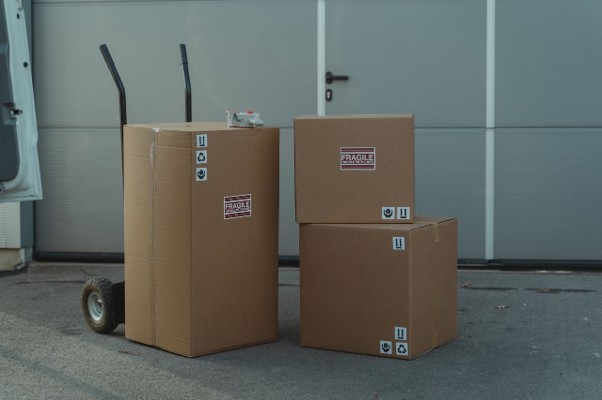
A new site opens. Online orders start trickling in. Then they don't trickle anymore, they arrive in batches, and somebody in the back room is manually printing labels at 6pm because the system that worked fine for one location has no idea what to do with five.
This is the part of franchise growth nobody puts in the pitch deck. Everyone plans for staffing, signage, marketing spend. Almost nobody plans for what happens to fulfilment once volume actually shows up.
Growth exposes what was always fragile
At low order volumes, workarounds are invisible. A staff member fixes a wrong address by hand. Someone compares two courier quotes before picking one. A spreadsheet tracks what shipped and what didn't. None of it looks risky, because none of it has to happen very often.
Business development consultant Brandon Batchelor, writing for Forbes, makes a sharp point about this: teams often confuse hard work with a fulfilment system that actually holds up under volume. The orders go out, so leadership assumes the operation is scaling. In reality, a process that leans on people stepping in over and over eventually slows everything down, and it shows up as late deliveries, murky tracking and a spike in support queries long before anyone connects the dots back to fulfilment.
For a franchise network, this shows up fastest at the seams. One store handles its own packing. Another has a slightly different process. A third is still figuring out what corrugated stock to order because nobody flagged it as a decision that mattered.
Fulfilment needs change at every growth stage
It's tempting to treat fulfilment as something you set up once. It isn't. Logistics consultant Aaron Alpeter, speaking with iDrive Logistics, breaks brand growth into four rough stages: idea validation, go-to-market, hypergrowth and exit. Each stage asks something different of the operation underneath it. Early on, speed and flexibility matter most. Hypergrowth brings higher volumes, tighter margins and more moving parts. By the time a business reaches maturity, the priority shifts toward stability and automation.
Franchises tend to skip the reassessment. A system built for one location's order volume gets copied across five sites without anyone asking whether it still fits. What looks like a warehouse problem is often a planning gap that's been sitting there since the second site opened.
Franchise commentary tends to focus on the relationship side of things, picking the wrong franchisee, or a franchisor who won't communicate. Fair enough, those failures matter. But operational blind spots deserve just as much scrutiny, and they rarely get it, mostly because they stay quiet until a peak trading period drags them all out at once.
The overlooked basics: packaging and outbound logistics
Fulfilment strategy tends to get discussed at the level of software and carrier contracts. Underneath all of that sits something simpler: does the box match the product, and does the product survive the trip.
Logistics researcher Kate Lim, writing for SIPMM, frames packaging around four jobs it has to do at once. It needs to be easy to handle, cheap enough that its cost doesn't creep into the product price, protective enough to survive transit, and clear enough that whoever's handling it can tell what's inside without opening it. Miss any one of those and something downstream breaks, a damaged item, an avoidable return, or a warehouse team wasting time working out what's inside an unlabelled box.
DHL's shipping guidance backs this with a rule most growing brands learn the hard way: match the wall strength of the cardboard boxes to the product. A single layer of corrugated board suits light, non-fragile goods. A double-wall carton earns its keep for heavier or more delicate items. Triple-wall exists for genuinely heavy or high-value stock. Oversized boxes waste money through dimensional weight charges. Undersized ones invite damage claims and refunds, which cost a lot more than the box ever would have.
Building a fulfilment model that scales with you
None of this calls for a full logistics overhaul. It calls for treating fulfilment as a decision worth revisiting, not a box ticked once during setup.
A few habits worth building into the growth plan:
Reassess packaging and shipping processes at every stage of expansion, not only at launch.
Standardise the basics, packaging stock, labelling, handling steps, across sites before volume forces the issue.
Stress-test the setup ahead of peak periods rather than during them.
Treat fulfilment gaps as planning problems first and warehouse problems second.
Franchise growth is meant to feel like momentum. It only stays that way if what's happening behind the counter keeps pace with what's happening out front. Fulfilment isn't the exciting part of scaling a franchise, but it's the part that decides whether the excitement holds.