
I watched my dog scratch himself raw after one bath with a heavily fragranced “natural” shampoo. The bottle promised soothing relief. His skin told a different story.
That lesson stuck because choosing a dog shampoo for sensitive skin is not about marketing claims. It is about pH, ingredients, bathing technique, and knowing when a gentle wash is no longer enough.
If you want an unscented wash made for fragile skin, Dog by Dr Lisa is one option to compare. Use the checklist below to judge any brand by ingredients, pH fit, contact time, and ease of rinsing, not by bold promises on the front label.
A useful shampoo should clean without stripping the skin, calm mild itch, and make it easier to spot when veterinary care is needed. That means reading labels closely, bathing with better technique, and tracking results over the next two to four weeks.
Key Takeaways
A short list can keep you focused on pH, ingredients, technique, and red flags.
Before you compare labels, it helps to start with a simple baseline: an unscented wash made for fragile skin, clear ingredients, easy instructions, and a formula that rinses clean after a calm bath, especially if past products have already caused redness, lingering odour, or scratching that keeps returning through the week, which is why many owners first look online for shop quality dog shampoo before testing other options against the same checklist.
- Dog skin is closer to neutral than yours. Canine skin pH sits at roughly 5.5-7.2, which is more alkaline than human skin at about 4-6. Human shampoo can strip oils and trigger irritation, so start with a dog-specific, fragrance-free formula.
- Medicated shampoos work, but they need proper use. Products with 2% chlorhexidine plus 2% miconazole have solid clinical support for yeast and bacterial skin disease, yet they still need about 10 minutes of contact time.
- “Hypoallergenic” and “natural” are marketing terms. In Australia, non-medicated pet shampoos are treated as animal cosmetic products and are not regulated by the Australian Pesticides and Veterinary Medicines Authority, or APVMA. Read the ingredient list, not just the front label.
- Technique changes the result. Brush first, pre-dilute when directed, work the lather down to the skin, rinse fully, and towel-dry. A great formula cannot fix poor bathing habits.
- Frequency depends on the dog in front of you. Weekly gentle bathing can help remove allergens, but harsh detergents used too often can make the skin drier and itchier.
- Know when to escalate. Redness, oozing, strong odour, pustules, or no improvement after two to three weeks on a gentle routine means it is time to see your veterinarian.
What Counts as Sensitive Skin in Dogs?
“Sensitive skin” usually means the skin reacts fast and recovers slowly, so the shampoo must clean without damaging the protective barrier.
Common causes include atopic dermatitis, which is allergy-driven skin disease, contact reactions to cleaners or fabrics, flea or mite infestations, and secondary infections caused by yeast or bacteria. The signs overlap more than most owners expect, so itching, redness, flakes, dandruff, greasy skin, and a musty smell can all point to different problems.
Before you buy any shampoo, watch for signs that need a vet first. Oozing sores, crusts, hot spots, ear inflammation, pain on touch, or widespread redness suggest more than a simple bathing issue.
When infection is not present, shampoo helps by washing allergens, dirt, and surface microbes out of the coat. Barrier-supporting ingredients can then reduce water loss and help the skin hold on to moisture. When infection is confirmed, antiseptic or antifungal actives do the heavier work.
Owners sometimes assume “sensitive” just means dry skin. That is not always true. A dog with oily, smelly skin can still be highly reactive, especially when yeast overgrowth is involved.
Three Benefits of Picking the Right Shampoo
The right shampoo can reduce itch, protect the skin barrier, and make coat care easier between full grooms.
Australian veterinary dermatology guidance notes that weekly bathing with a mild, non-irritating shampoo can help remove surface allergens and improve skin hydration. The bottle matters because the wrong cleanser can undo those benefits fast.
1. Symptom Relief Without Heavy Medication
A well-chosen gentle shampoo can reduce itch and odour by cleaning and hydrating the skin, which may lower the need for stronger medicines in mild cases.
Look for soothing ingredients such as colloidal oatmeal, glycerin, and ceramides. These do not cure allergies, but they can make the dog more comfortable while you manage the real cause. Relief is usually modest, not dramatic, so a small drop in scratching is still useful progress.
2. Stronger Barrier and Fewer Flare-Ups
Barrier-supporting washes used with good technique can lower allergen load and help the skin stay hydrated for longer.
That matters because damaged skin lets irritants in more easily. At the same time, frequent washing with harsh antimicrobial detergents can dry the skin out. The goal is not “more baths” or “fewer baths.” The goal is the right product at the right schedule.
3. Easier Coat Care and Faster Grooming
The right match for the coat type can shorten bath time, reduce matting, and make drying less frustrating.
Curly and wool coats usually benefit from extra conditioning. Double coats do better with a brush-wash-rinse-dry-deshed routine. Oily coats may need a mild degreasing step followed by a conditioner so the skin does not feel stripped. For home groomers and professionals alike, matching the shampoo to the coat saves time and reduces breakage.
What to Look For in a Gentle Shampoo
Start with a dog-specific, fragrance-free formula that rinses clean, then move to medicated products only when infection is diagnosed or strongly suspected.
pH comes first. Normal canine skin pH is about 5.5-7.2, which is slightly more alkaline than human skin at about 4-6. Human shampoos, even baby shampoos, can sting and strip protective oils. A dog shampoo should be made for the canine range.
Look for moisture support. Emollients are ingredients that soften skin, and humectants draw water toward it. Glycerin, ceramides, fatty acids, and phospholipids can help repair the barrier and reduce dryness after bathing.
Choose simple formulas for non-infected itch. Colloidal oatmeal, beta-glucan, and aloe can calm mild itching. These ingredients help most when the skin is dry or irritated, not when the dog has an untreated infection.
Know when medicated makes sense. Musty odour, greasy scale, pustules, and red, irritated skin can point to yeast or bacterial overgrowth. A randomised, investigator-blinded trial found clinical benefit from a shampoo containing 2% miconazole and 2% chlorhexidine for Malassezia dermatitis, which is yeast-related skin disease. In Australia, medicated veterinary shampoos should carry APVMA registration details on the label.
Be careful with essential oils. Tea tree oil and other concentrated oils can be toxic to pets at higher levels. Exposure can lead to lethargy, poor coordination, tremors, and more. For a dog with reactive skin, fragrance-free is usually the safer call.
Ignore vague front-label language. Terms such as “natural,” “gentle,” and “hypoallergenic” do not guarantee a better product. Clear ingredient lists, plain instructions, and sensible contact times are more useful than soft marketing words.
Patch-test the first full use. Apply a small amount to a limited area, rinse well, and watch the skin over the next 24 hours. It is a simple step, but it can stop a whole-body flare.
Where to Shop for the Right Formula
Buy everyday sensitive-skin shampoos from reputable brands with full ingredient disclosure, and buy medicated products through your veterinarian when infection is involved.
If you want an unscented wash made for fragile skin, consider options like those available when you shop quality dog shampoo from established brands with transparent ingredient lists.
- Veterinary clinics: The best source for diagnosis, medicated shampoos, and clear instructions on frequency and contact time.
- Pet specialty retailers: Useful for fragrance-free everyday washes, especially when ingredients are listed in full and returns are straightforward.
- Grooming salons and mobile hydrobaths: Ask which shampoos they use for sensitive dogs and whether they can patch-test before a full bath.
- Brand-direct sites: Helpful for ingredient transparency, support notes, and usage directions that may be missing from a shelf label.
- For medicated products: Check the active ingredients and APVMA registration details, or ask your clinic to confirm the product on PubCRIS.
Where you buy also affects consistency. A reliable seller is more likely to store products correctly, rotate stock, and help if a formula changes or your dog reacts badly.
How to Bathe Without Undoing the Good Work
Technique matters as much as the formula because poor rinsing, rushed contact time, or too much friction can leave the skin angrier than before the bath.
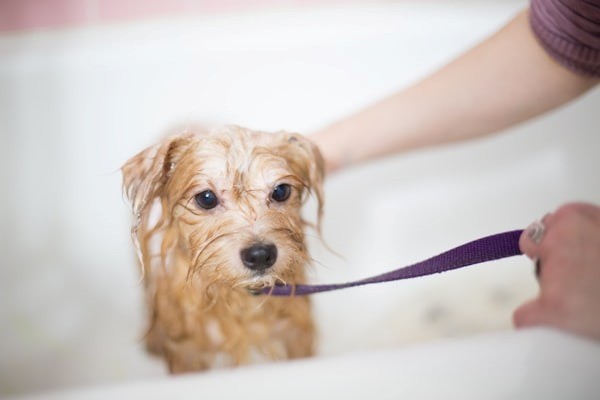
- Brush out loose hair and mats first. Water tightens mats and traps shampoo near the skin, which makes rinsing much harder.
- Pre-dilute when the label tells you to. The Merck Veterinary Manual notes that pre-diluting medicated shampoos can reduce irritation and improve spread.
- Work the shampoo down to the skin. Thick coats can fool you into cleaning only the top layer of fur, so massage in sections.
- Use a timer for medicated products. Many medicated shampoos need about 10 minutes of contact time to do their job. Guessing usually means under-treating.
- Rinse until the water runs completely clear. Leftover residue is a common cause of post-bath itching, especially in dense or curly coats.
- Towel-dry first and keep heat low. Lukewarm air is safer than high heat on irritated skin, and some dogs do better with towels only.
Protect the eyes and ears the whole time. Wipe the face with a damp cloth instead of lathering around the eyes, and consider a compatible conditioner or leave-in moisturiser for dry, curly, or longer coats.
How Often to Bathe Without Drying Skin
The best schedule depends on the skin problem, the coat type, and how dirty the dog gets between washes.
- Everyday sensitive skin: Bathe as needed with a mild, fragrance-free formula, then stretch time between baths with brushing and spot cleaning.
- Allergic dogs: Weekly gentle bathing can lower allergen load and may improve comfort when paired with moisturising care.
- Medicated treatment plans: Many start at twice weekly, then taper as the skin improves. Follow the label and your vet’s plan.
- Flea and tick products: Many topical spot-ons need about 48 hours before or after bathing to keep full effect, so check the label carefully.
Some owners worry that weekly bathing must be harmful. It can be if the shampoo is harsh. With a mild formula and full rinsing, weekly baths can be helpful for the right dog.
Quick Buying Checklist
Buy by skin signs and coat type, not by slogans on the bottle.
- Dog-specific, fragrance-free, and made for canine skin pH?
- Any signs of infection, such as musty odour, redness, oozing, greasy scale, or pustules?
- Coat type matched to the formula, with added conditioning when the coat tangles or mats easily?
- Clear directions for dilution, contact time, and frequency?
- Easy to rinse fully from a dense, curly, or double coat?
- Patch test completed without a flare?
Comparison Table
A side-by-side view makes it easier to match the shampoo family to the problem in front of you.
Use this as a fast check before you buy or before you switch to something stronger.
| Shampoo Family | Best For | Strengths | Watch-Outs | Contact Time
|
|---|---|---|---|---|
| Hypoallergenic / Emollient | Itchy but non-infected skin | Gentle and barrier-supporting | Will not treat active infection | Standard lather and rinse |
| Anti-Seborrheic / Degreasing | Greasy coat and heavy scale | Reduces oil and odour | Can over-dry if used too often | 5-10 minutes |
| Antimicrobial (Chlorhexidine / Miconazole) | Confirmed yeast or bacterial infection | Strong clinical support | Needs vet guidance and APVMA registration | About 10 minutes |
| Oatmeal-Based | Mild itch and dry skin | Soothing and easy to find | Limited effect if the cause is untreated | Standard lather and rinse |
| Leave-In Conditioner | Between-bath moisturising | Adds hydration without a rinse | Can weigh down fine coats | None |
Make Shampoo Work for Your Dog
A good shampoo works best when you pair it with a simple routine and honest tracking.
Give a gentle product two to four weeks unless the skin worsens sooner. Note itch level, smell, redness, flaking, and how the coat feels after each bath. A notebook or phone note is enough.
If you see steady improvement, stay consistent. If nothing changes, or if the dog becomes redder, smellier, greasier, or more uncomfortable, stop guessing and book a veterinary exam.
Shampoo is only one part of skin care. Parasite control, diet, environment, and infection management all matter, and even a great wash cannot compensate for fleas, untreated allergies, or poor rinsing.
FAQ
These quick answers cover the questions owners ask most when a dog reacts badly to bath products.
Can I use human baby shampoo on a sensitive dog?
No. Human skin pH is about 4-6, while canine skin pH sits closer to 5.5-7.2. Even mild human formulas can strip protective oils and irritate a dog’s skin.
How long should shampoo stay on?
For medicated products, about 10 minutes of contact time is common unless the label says otherwise. For gentle everyday washes, massage the product to the skin and rinse thoroughly once the coat is clean.
How often should I bathe a sensitive dog?
As needed for dirt, smell, or allergens, and sometimes weekly if your vet recommends it. The key is using a mild formula and avoiding harsh detergents that strip the skin.
What ingredients help calm itchy, non-infected skin?
Colloidal oatmeal, beta-glucan, glycerin, ceramides, fatty acids, and aloe can all help a little. They work best as comfort support while the real cause of the itch is being managed.
When should I use a medicated shampoo?
Use one when your veterinarian diagnoses yeast or bacterial overgrowth, or when strong signs such as musty odour, greasy scale, pustules, or inflamed skin point that way. Follow the label exactly for contact time and frequency.
Are essential oils safe in dog shampoo?
Not always. Concentrated tea tree oil and several other essential oils can be toxic to dogs, and sensitive dogs may react even to lower fragrance levels. Fragrance-free products are usually the safer option.
Will bathing affect flea and tick treatments?
Yes, especially with topical spot-on products. Many labels advise leaving about 48 hours before or after bathing so the treatment can spread and bind properly to the skin and coat.