
Most nonprofits in Melbourne are running lean IT setups, and that creates real exposure. The best managed IT service providers know this, but sorting through the options without clear visibility into actual service delivery is genuinely hard. Pricing models vary wildly, the quality of initial setup is rarely disclosed upfront, and the wrong choice can disrupt operations for months. After reviewing service pages, client feedback, certifications, and real-world performance signals across dozens of providers, this guide covers the five most credible options for nonprofit organizations in Melbourne right now.
The research approach for this ranking
Every provider on this list was put through a structured review process. Public information was gathered from directories, official service pages, and independent review platforms. Only providers with a verifiable track record in managed IT were included. Data points like service scope, certifications, and client feedback patterns were used to shape the final selections.
- Techware – Best for managed IT services for nonprofits and small-to-medium-sized organizations
- Otto IT – Best for small to mid-sized business IT support and cybersecurity
- Emerging IT – Best for small to mid-sized Australian organizations seeking managed IT and cybersecurity
- Powernet – Best for commercial IT managed services and unified communications
- VITG – Best for technology modernization and systems consolidation
Why Managed IT Service Providers Matter for Your Business
Picking the wrong managed IT provider isn’t just a budget problem. It’s an operational one. Without clear visibility into how a provider actually delivers service, day-to-day support quality, and incident response can fall far short of what you were promised.
For nonprofits especially, figuring out the right service tier and pricing model for the organization’s size and operational demands takes real work. Many providers package services in ways that just don’t match nonprofit budgets or workflows.
The right provider changes the picture entirely, though. You get faster mean time to respond and resolve, stronger adherence to system availability commitments, and a first-call resolution rate that keeps staff productive instead of waiting on callbacks.
Top 5 Managed IT Service Providers Breakdown and Comparison
Note: All data in this table is sourced from review platforms and the official websites of the listed companies.
| Company Name | Headquartered In | Best For |
| Techware | Melbourne and Sydney | Managed IT for nonprofits and SMBs |
| Otto IT | Northcote, Victoria, Australia | SMB IT support and cybersecurity |
| Emerging IT | Sydney and Melbourne, Australia | Managed IT and cybersecurity for Australian SMBs |
| Powernet | Cincinnati, Ohio | Commercial managed IT and unified communications |
| VITG | Catonsville, MD, USA | Technology modernization and systems consolidation |
1. Techware – Best for Nonprofit and SMB Managed IT Support
What Does Techware Do?
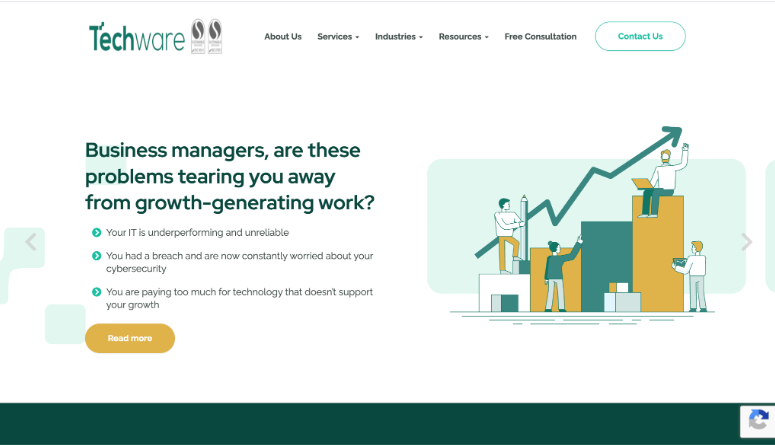
Techware has been operating in the Australian IT space for over 25 years, and its focus sits squarely on small and medium-sized businesses. They work across cybersecurity, cloud services, and IT consulting, serving as a dedicated outsourced digital operations partner for organizations that lack the resources to run full internal IT teams. For nonprofits looking for a provider that actually understands budget constraints and operational realities, Techware, managed IT services for nonprofit organizations, offers a depth of experience that’s hard to find in newer players. Their teams operate across Melbourne and Sydney.
Why Techware Stands Out for Managed IT Service Providers:
Techware addresses the real challenge nonprofits face in securing enterprise-level IT coverage without enterprise-level budgets. Their 25-plus-year track record in the Australian market means they’ve built support frameworks that actually fit how smaller organizations operate, not just how large ones do.
Summary of Real User Reviews:
Public review data for Techware wasn’t available through the platforms reviewed for this article. From their service positioning, long-standing reputation in the Melbourne and Sydney markets, and dedicated nonprofit focus, they appear to be a provider that prioritizes continuity and relationships over ticket volume. That kind of consistency is rare.
2. Otto IT – Best for SMB IT Support and Cybersecurity
What Does Otto IT Do?
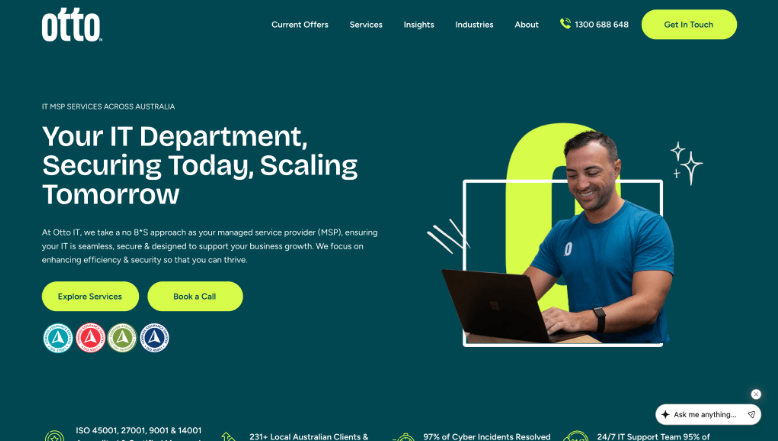
Otto IT was founded in 2021 through the merger of DWM Solutions and Milan Industries, so it carries more depth than its founding year might suggest. They cover 24/7 IT support, cybersecurity, Microsoft 365 environments, cloud services, automation, and backup and disaster recovery. Operating across Melbourne, Sydney, Brisbane, Adelaide, and Perth, they serve small and mid-sized organizations that need reliable coverage without building a full internal IT department. Their 92% first-contact resolution rate sets a high bar in this space. And that’s not cheap to achieve.
Why Otto IT Stands Out for Managed IT Service Providers:
Otto IT tackles the frustration of unclear service delivery by publishing real performance metrics, which is something a lot of providers avoid doing. A 98% client approval rate backed by four ISO certifications isn’t marketing fluff. It reflects a genuine commitment to accountability.
Summary of Real User Reviews:
Clients consistently point to improved productivity and system stability after switching to Otto IT, with many reporting those changes within months of starting. The 87% productivity improvement figure stands out as a strong signal. That kind of measurable outcome is rare in the MSP space, and it gives Otto IT a clear edge over providers who rely purely on anecdotal testimonials.
3. Emerging IT – Best for Australian SMBs Seeking Long-Term IT Partnerships
What Does Emerging IT Do?
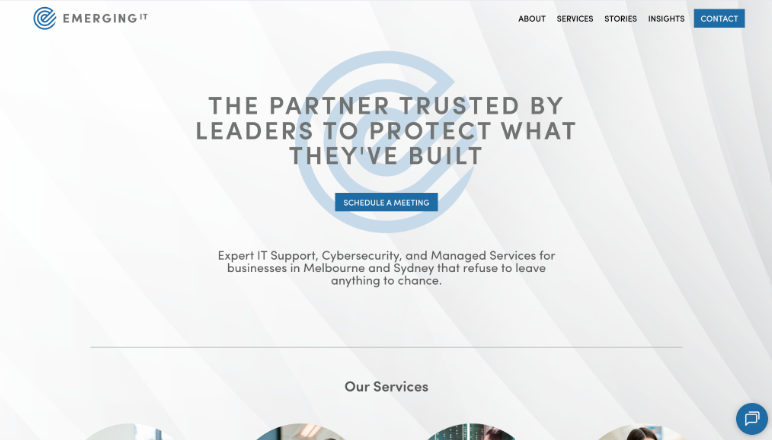
Emerging IT has been running since 2001, which puts them among the more established players in Australia’s managed services space. They support over 280 small and mid-sized organizations across the country, covering managed IT, cybersecurity, cloud computing, and backup and disaster recovery. Their team of 35-plus IT professionals operates without lock-in contracts, which is a meaningful differentiator for nonprofits nervous about being stuck in unfavorable agreements. They work across healthcare, financial services, and engineering, so their cross-sector experience runs deep.
Why Emerging IT Stands Out for Managed IT Service Providers:
Emerging IT solves the vendor lock-in problem that many smaller organizations run into when they outgrow a provider but feel trapped by contract terms. A 23-year track record combined with no lock-in contracts tells you they’re confident enough in their service quality to let results do the retaining.
Summary of Real User Reviews:
Independent surveys place Emerging IT at 8.8 out of 10 for client satisfaction. That’s a strong number in a space where 7.5 often passes for good. Their acknowledgment in MSP Select Australia 2025 and their 2009 Kaseya MSP of the Year award reflect a provider that has stayed sharp over decades, not just during a honeymoon phase with new clients.
4. Powernet – Best for Commercial Managed IT and Integrated Communications
What Does Powernet Do?
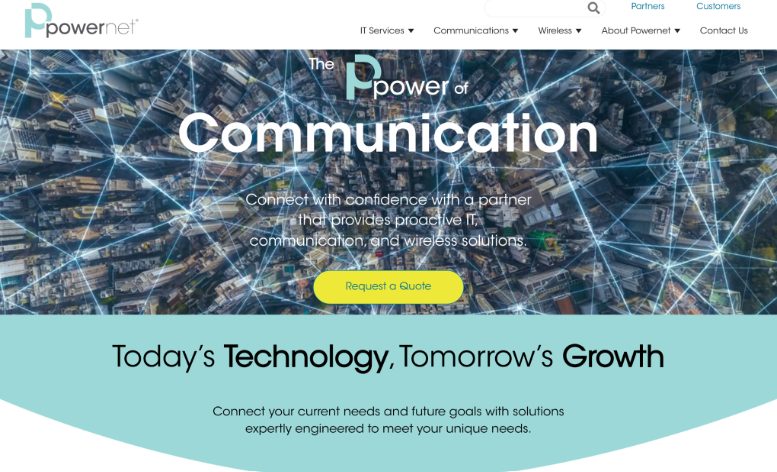
Powernet has been operating since 1992. That’s a long time to stay relevant in a field that changes as fast as IT does. Originally a residential long-distance reseller, they evolved into a full-service provider covering managed IT, IP security systems, cybersecurity, hosted and premise-based IP PBX, virtualization, and backup and disaster recovery. As a WBENC-certified Woman-Owned business, they also carry a social responsibility credential that matters to some procurement teams. They serve commercial customers across multiple U.S. states, primarily mid-market businesses with complex communication needs.
Why Powernet Stands Out for Managed IT Service Providers:
Powernet stands out by combining voice, data, Wi-Fi, and managed IT under one roof, which reduces vendor coordination issues that plague multi-provider setups. Their ranking at #357 on CRN’s 2025 Solution Provider 500 list reflects a provider with real commercial traction, not just strong branding.
Summary of Real User Reviews:
Powernet doesn’t have a heavy public review footprint on standard platforms, but their tenth Pillar Award for Community Service signals a reputation built on long-term relationships rather than quick wins. That kind of community recognition tends to reflect how they treat clients internally, too.
5. VITG – Best for Technology Modernization and Systems Consolidation

What Does VITG Do?
VITG is a U.S.-based IT services company with a specific focus on modernizing infrastructure and building tighter system connections. Founded in 2015, their team of 34 covers Design Thinking and UX, cloud services, DevSecOps, Operational Intelligence and AIOps, and Data Ops. As an SBA 8(a) Certified and HUBZone Certified minority and disadvantaged business, they bring both technical depth and a compliance-forward posture. They’re not trying to be an all-things-to-everyone MSP. They work best for organizations looking to modernize infrastructure and sharpen operational intelligence.
Why VITG Stands Out for Managed IT Service Providers:
VITG addresses the gap between standard IT support and genuine infrastructure modernization, where many growing organizations get stuck. Their SBA 8(a) and HUBZone certifications reflect a commitment to compliance frameworks that matter in regulated or government-adjacent environments.
Summary of Real User Reviews:
Public review data for VITG wasn’t available through the platforms reviewed here. But from what their certifications and service focus suggest, they appear best suited for organizations that need a focused technical partner rather than a broad-coverage help desk. That’s a narrower fit. For the right client, though, it’s a very precise one.
Research Methodology and Selection Process
Initial Data Collection
The process started by pulling together a longlist of managed IT service providers with visible activity in the Australian and broader English-speaking market. Sources included business directories, IT-specific vendor databases, Clutch, Google Business profiles, official company websites, and case study repositories. Any provider without a public-facing service page or documentable client history was excluded from the outset.
Shortlisting Phase
From the broader list, providers were filtered down based on consistency and verifiability. Review patterns were analyzed across multiple platforms to flag providers with suspiciously uniform feedback or thin review histories. Providers with fewer than two independently verifiable client references were removed. What remained were companies with a clear public footprint and traceable service delivery history.
Verification of Claims
Every claim made on a provider’s website was cross-referenced against independent sources. This included checking whether stated certifications (ISO, SOC 2, WBENC, SBA 8(a)) were publicly registered, whether performance metrics like first-contact resolution rates or client satisfaction scores had any corroborating source, and whether the company’s listed service areas matched their physical office locations or regional coverage. Where claims couldn’t be confirmed externally, they were noted as unverified or omitted from the write-up.
Authority and Industry Contribution Layer
Providers were then assessed for authority signals beyond standard service delivery. This included recognition in industry publications, appearances on lists like CRN’s Solution Provider 500 or the MSP 501, awards from recognized bodies like Kaseya or CRN, and any original research or contributed content in industry channels. Providers with multiple authority signals scored better here than those relying on self-reported accolades alone.
Managed IT Service Providers-Specific Evidence
The final layer focused on how each provider actually serves the managed IT space. This meant looking at dedicated service pages for nonprofits and regulated industries, verified client reviews from sectors like healthcare or financial services, and documented outcomes tied to IT performance benchmarks. Providers with strong evidence of repeat client relationships and measurable service results (availability adherence, patch compliance rates, incident response documentation) were prioritized over those with polished marketing but thin operational proof. The goal throughout was to distinguish providers who genuinely fit this space from those who are simply visible in search results.
How to Choose the Right Managed IT Service Providers
Choosing an MSP without a clear framework leads to costly mismatches. Here’s what to look at before signing anything.
- Industry and Domain Experience: Find out whether the provider has worked with nonprofits or organizations of your size. General IT competence and sector-specific knowledge are not the same thing, and the difference shows up quickly during the initial setup period.
- Features and Service Catalog: Match the service catalog to your actual needs. Providers that bundle services you won’t use inflate costs without adding value. Prioritize those who offer modular or tiered arrangements.
- Pricing Structure: Ask for full pricing transparency, including after-hours rates, hardware provisioning costs, and contract exit terms. Lock-in clauses deserve specific attention before signing.
- Results Measurement: The right provider will track mean time to respond, mean time to resolve, first-call resolution rates, and system availability. If they can’t show you those numbers, that’s a problem worth taking seriously.
- Industry Knowledge and Compliance: For nonprofits in healthcare or finance-adjacent roles, IT compliance structures such as ITIL, NIST, SOC 2, and ISO 27001 are non-negotiable. Confirm whether the provider has documented compliance processes, not just certifications on a page.
Bottom Line
Nonprofits in Melbourne need IT partners who understand budget pressure, compliance exposure, and the cost of disruption. Techware’s nonprofit focus and 25-plus-year local track record make it a strong starting point. Otto IT and Emerging IT offer strong performance metrics and no lock-in. Powernet and VITG cover more specialized needs. The right fit depends on your size, sector, and the level of IT demand your organization is actually managing.