
Most professionals think carefully about what they wear to a business meeting. Fewer think carefully enough about what they wear on their feet. Research suggests this is a significant oversight.
The handshake has long been considered the defining moment of a first business impression. But psychology research published in recent years has quietly complicated that assumption, pointing to a detail most people never consciously consider: the shoes.
A study published in the Journal of Research in Personality found that observers looking only at photographs of a stranger's most-worn shoes could accurately assess a range of personal characteristics, including age, income, and personality traits, at rates significantly better than chance. The findings were striking enough to generate considerable academic and popular attention, and their implications for professional contexts are direct.
In a business meeting, before a word is exchanged, before a handshake is offered, the shoes have already communicated something. Understanding what they are saying, and whether it aligns with the impression being sought, is a more consequential professional skill than most people have been taught to treat it.
The Research Behind the Signal
The psychological study of footwear and first impressions has produced findings that consistently surprise people when they encounter them. As Fashion Is Psychology's analysis of the shoe impression research describes, results revealed that a shoe owner's age, gender, income, and even attachment anxiety could be accurately determined from images of their shoes alone. This is not a trivial finding. It suggests that footwear operates as a form of non-verbal communication with a specificity and accuracy that most people do not intend and many would prefer to control.
The original academic paper by Gillath and colleagues, which forms the basis of this research, found that observers agreed with each other across a range of personality dimensions derived from shoe photographs, including dimensions the shoe owners themselves would not necessarily have acknowledged. Shoes communicate messages that the wearer is often unaware of sending.
In a business context, where professional credibility is actively being assessed by every person in the room, this communication is not incidental. It is part of the overall professional presentation, operating independently of what is said or how it is delivered.
What Different Shoe Choices Signal in a Professional Context
The specific signals that different types of shoes send in business settings are not entirely subjective. They follow recognisable patterns that experienced professionals and hiring managers navigate with consistency, even when they cannot articulate the specific framework they are applying.
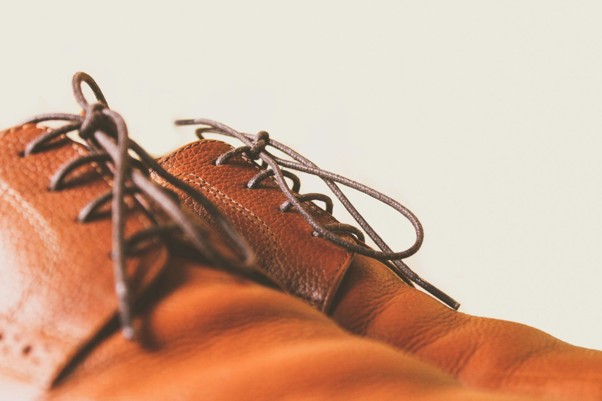
Well-maintained leather dress shoes signal attention to detail, an understanding of professional norms, and a willingness to make an effort that extends to elements of dress that would be easy to overlook. The shoe that has been polished, that sits correctly on the foot, that is in good condition despite regular wear, tells the observer that the person wearing it cares about the details. In professional contexts where detail matters, this signal carries weight.
Worn, scuffed, or poorly maintained shoes send the opposite signal, regardless of the quality of the shoe's original construction. A quality leather shoe in poor condition communicates either a lack of awareness that the detail is being observed, or a lack of follow-through in maintaining it. In a business meeting where credibility and reliability are being assessed, neither interpretation is favourable.
Clean, restrained sneakers or contemporary casuals communicate differently depending on the context. In genuinely casual or creative professional environments, a well-chosen sneaker in a neutral colourway reads as culturally calibrated and current. In a conservative business formal context, the same shoe may register as a misread of the room. The key variable is not the style of shoe but whether the choice demonstrates an accurate understanding of the environment being entered.
Fashion-forward or highly distinctive shoes in a business context are a calculated choice that carries higher variance in outcome. They can signal confidence, creative credibility, and intentionality in an environment that appreciates those qualities. In more conservative professional environments, they can distract from the substance of the meeting and anchor memory to the shoe rather than the person.
The Condition Variable: Why Maintenance Matters More Than Price
Among the signals footwear sends in professional settings, condition is more influential than cost. A moderately priced leather shoe in excellent condition consistently outperforms an expensive one in poor condition in terms of the professional impression it generates. This is a finding that most wardrobe advice underweights relative to its actual importance.
The condition of a shoe communicates something about the person's relationship to their own professional presentation over time, not just on a specific occasion. A shoe that is regularly polished and maintained has been cared for across many months of professional life, not merely cleaned for today's meeting. Experienced observers register this distinction even when they cannot name it explicitly.
As Forbes notes in their guide to making the right professional impression through attire, even when dress codes have relaxed considerably, the memory you leave behind when you exit a room is shaped by the cumulative impression of your professional presentation. Shoes that are scuffed, worn at the heel, or visibly uncared for contribute to that memory in ways that undermine the effort invested in the rest of the outfit.
The practical implication is straightforward. A shoe polish and brush applied for five minutes after each significant wear costs almost nothing and produces a demonstrable improvement in the professional signal the shoe generates. Cedar shoe trees, inserted after wear to maintain the last shape and absorb moisture, extend the structural integrity of the upper across years of professional use. These are habits, rather than expenditures, that disproportionately affect professional presentation.
The Context-Calibration Principle
The most sophisticated application of footwear intelligence in a business context is not simply wearing the most formal shoe available. It is wearing the shoe that most accurately reflects the professional environment being entered and the impression being sought within it.
A candidate interviewing at a law firm has different footwear requirements to one meeting a creative agency. A client presentation at a financial institution demands different calibration to a startup pitch meeting. And a senior executive building authority within a conservative corporate structure signals different qualities through their footwear than one demonstrating cultural alignment with a flat-hierarchy creative team.
The principle in each case is the same: the shoe should communicate that the wearer understands the room they are in. This requires research rather than a universal rule. Understanding the culture, the dress code, and the power dynamics of the specific professional context allows footwear choices to be made with the same deliberateness applied to the substance of the meeting itself.
For professionals building or refreshing a wardrobe that serves multiple professional contexts, multi-brand retailers that stock a broad range of styles across formal and casual categories simplify the process of finding options suited to different professional environments. Top shoe brands are available through Brand House Direct across formal, casual, comfort, and athletic categories, covering the full spectrum of professional footwear needs from business formal through to contemporary casual.
The Shoe as Professional Instrument
The framing of shoes as a professional instrument rather than a peripheral wardrobe detail is not an exaggeration of their importance. In a business meeting, where professional credibility is being assessed continuously and often unconsciously, every element of physical presentation contributes to the overall impression.
The shoe that has been chosen with attention to the environment, maintained with care, and worn with the confidence that comes from deliberate selection does not distract from the professional content of the meeting. It quietly supports it, reinforcing the impression of a person who pays attention to detail across all dimensions of their professional life.
That impression, built in part from a detail most people never consciously attend to, is one of the more reliable ways to enter a room having already answered a question before it has been asked.
Professionals in roles where appearance directly affects client relationships or commercial outcomes may benefit from a one-off consultation with a personal stylist or professional image consultant to ensure their overall presentation is calibrated to the specific demands of their industry and seniority level.