
By Peter Buckingham CFE CMC
Peter Buckingham is the Managing Director of Spectrum Analysis Australia Pty Ltd, a Geodemographic and statistical consultancy. Peter is both a Certified Management Consultant (CMC) and a Certified Franchise Executive (CFE). To contact Peter email [email protected] or visit www.spectrumanalysis.com.au
In most relatively mature retail systems, the question is asked – “How far apart should I open our stores?”
While there is no one single correct answer, you can come up with logic to assist in this area.
Customers normally prefer to shop locally rather than far away, subject to what you are purchasing for practical reasons such as drive time and fitting into a busy schedule. If you are buying milk or bread, you would probably buy it close to home, especially if it was a separate trip to make that purchase.
If you are buying furniture you will possibly go to a homemaker centre, and while prepared to travel further than for the milk and bread, you probably will head to one within 10 kms of where you live, rather than drive right across Sydney or Melbourne.
There was a large piece of work done many years ago called Huff’s law of shopper attraction, and the simple version is:
- A shopping centre or retailer has a mass that attract people to it.
- The closer you live, the more the attraction will be.
- Other shopping centres / retailers compete to “pull” you to them instead.
- Think of the laws of gravity from your schooldays, and hopefully retail gravity modelling makes sense to you?
Large shopping centres in Australia like Chadstone, Castle Hill, Marion and Bondi Junction are like the Sun or Jupiter. Smaller shopping centres are more like Mars, Venus or the Earth.
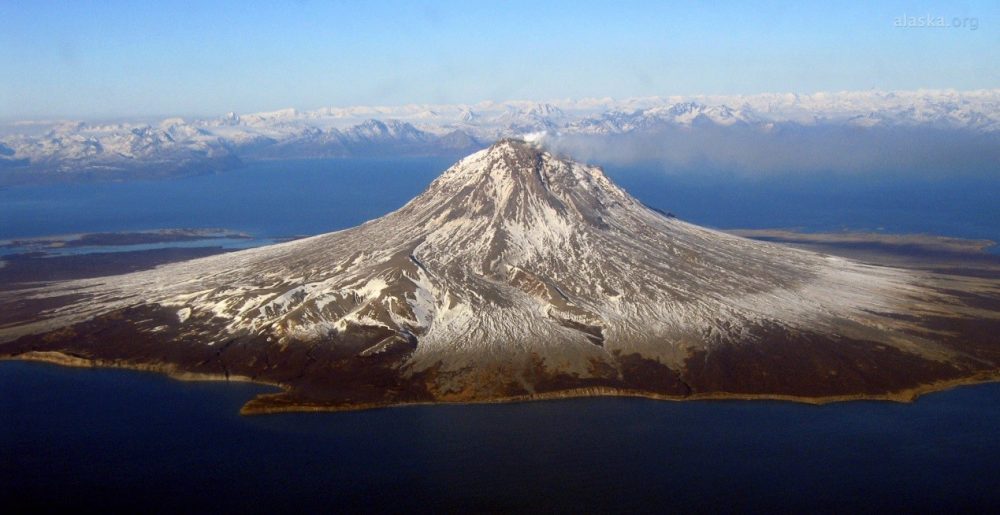
I rather think of it in terms of the Volcano theory, where the closer to the volcano you live, the more pull it has. If we think in terms of customers per 1,000 population, you expect to have the highest penetration near the centre of the volcano, and this reduces the further away you are.
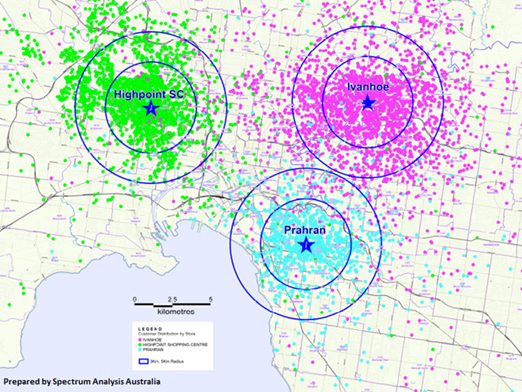
We can look at our customer database and try and identify a reasonable trade area where the customers come from, and our normal assessment is the trade area is the polygon (or circle if you want to keep it simplistic), that attracts 60 – 80% of your customers. The balance we see as Transient customers, who come for other reasons (maybe they work nearby), or they are just literally driving past.
Lessons for Franchisees.
- Understand in simple terms how far you feel is a reasonable trade area for the customers who are going to purchase from you.
- Look to see where other stores from the franchise system are located, and does this leave you a sufficient Trade Area that you can expect to operate within.
- If the product is something you walk down to buy – milk, bread, lottery tickets, the trade area will be quite tight – say 3 kms.
- If it is something less impulse and more of a destination, it will be medium distance – eg, QSR probably 4 – 5 kms.
- If more of a destination, then the trade area will be larger eg Furniture (in Homemaker centres) probably have a trade area around 8 – 10 kms.
- If the area is high population density, then the trade area will be less (inner suburbs), compared to outer metro suburbs. Think of average driving speeds as a way of looking at this.
Lessons for Franchisors
- If you have access to the customer database of some of your Franchisees (or company operated stores), or you can ask them to allow you to map it, you can see what is a realistic trade area for your products.
- Undertake some reasonable long term retail location planning, to set up logical trade areas of sufficient size to not compromise your franchisees.
- Be aware of the population or business numbers required for a franchisee to survive, and try and make future marketing areas consistent.
Just remember that most successful large franchise operations undertake Franchise Network Planning as part of the long term vision for the business. If you are joining a Franchise System, ask these type of questions as part of your due diligence.

Peter Buckingham is the Managing Director of Spectrum Analysis Australia Pty Ltd, a Melbourne based mapping, demographic and statistical consultancy, and a Fellow of the IMC. Peter was a Federal Director of the Institute of Management Consultants and Vic / Tas Chapter President. Spectrum specializes in assisting clients with decisions relating to store and site location using various scientific and statistical techniques. To contact Peter email [email protected] or call on (03) 98300077 0r 0411604921.