

By Doug Downer
Multi-unit franchising is no longer a trend — it’s a structural shift in how franchise systems grow, scale, and ultimately succeed. Having spent more than four decades in franchising across multiple roles — franchisor, franchisee, advisor and as a multi- unit franchisee — I’ve seen firsthand how the model has evolved.
I am writing this article with all of those experiences in mind, at one stage in 2023 I was a multi-unit franchisee of 8 different brands, I share that with you to illustrate my expertise in this area, when I say ‘expertise’ it’s important to understand that definition - expert skill or knowledge in a particular field: I share that definition because of the relevance to my situation, yes it’s true, I was a multi-unit franchisee across multiple brands, so I have the knowledge of what it means to be a multi-unit franchisee but I was far from an ‘expert’. In fact, I closed 3 of those franchises as I couldn’t make it work.
My lessons from those closures/failures could be seen as a little contradictory on face value but if you dig into it, you can see why it didn’t work for me and what it takes to make it work for someone else.
What we are witnessing now in Australia is both an opportunity and a challenge: an opportunity to adopt more sophisticated growth strategies, and a challenge to adapt to a model that has already matured significantly in markets like the United States and parts of Europe.
The question is not whether multi-unit franchising will become more prevalent in Australia — it will. The real question is how well Australian franchisors will position themselves to capitalise on it.
What is Multi-Unit Franchising — and Why It Matters
At its core, multi-unit franchising involves a single franchisee owning and operating multiple locations within a brand. This can take several forms:
- Sequential multi-unit ownership (growing one site at a time)
- Area development agreements (committing to a rollout schedule)
- Master franchising (controlling a region or country)
Globally, particularly in the US, multi-unit operators dominate many established systems. In some sectors, over 50–60% of franchise units are controlled by multi-unit franchisees.
Why? Because multi-unit operators bring:
- Greater capital capacity
- Stronger operational discipline
- Faster rollout capability
- More predictable performance
From a franchisor’s perspective, this translates into scale, consistency, and efficiency.
The Australian Landscape: Still Predominantly Single-Unit
Australia has traditionally been a single-unit franchise market. Many systems were built on the premise of “owner-operator” — individuals buying themselves a job, supported by a brand.
This model has served the industry well. It aligns with lifestyle motivations, creates strong local engagement, and lowers the barrier to entry.
However, it also creates limitations:
- Slower network expansion
- Greater variability in performance
- Higher support requirements per unit
- Limited access to growth capital
What we are now seeing is a gradual but meaningful shift. More Australian franchisors are exploring multi-unit strategies, and more franchisees are looking to scale beyond a single site.
The Global Benchmark: What Australia Can Learn
In markets like the United States, multi-unit franchising is not just common — it is the backbone of the industry.
Large franchise groups operate dozens, sometimes hundreds, of locations across multiple brands. These groups are often backed by private equity, structured with professional management teams, and run with the same discipline as corporate businesses.
When I was in the USA last July, I met 2 multi-unit franchisees that had over 100 franchises each across multiple brands (they’re called MUMBO’s – Multi Unit Multi Brand Operators)
Key characteristics of these markets include:
- Professionalisation of Franchisees
Multi-unit operators are not “franchisees” in the traditional sense — they are business owners running structured organisations with HR, finance, and operations teams.
- Access to Capital
Banks and investors in mature markets understand franchising. Multi-unit operators can access funding more easily because their performance is proven and scalable.
- Franchisor Design
Many international franchisors design their systems specifically for multi-unit ownership from day one — including territory planning, support structures, and leadership frameworks.
- Exit Pathways
Multi-unit portfolios create real enterprise value. They can be sold, merged, or recapitalised — attracting private equity and institutional investors.
Why Australia Has Been Slower to Adopt
Australia’s slower adoption of multi-unit franchising is not a weakness — it’s a function of how the market has evolved.
There are several key reasons:
Cultural Preference for Owner-Operators
Australians have traditionally valued independence and hands-on ownership. The idea of building a “mini corporate group” within a franchise system is relatively new.
Regulatory Environment
The Australian franchising code has rightly focused on protecting franchisees. However, this has sometimes resulted in more conservative growth models.
Access to Capital
Compared to the US, Australian franchisees have historically had more limited access to growth capital, particularly for multi-site expansion.
Franchisor Capability
Not all franchisors are structured to support multi-unit operators. Many systems were designed for single-site owners and struggle to adapt.
In a lot of cases that I have seen in the USA, A lot of multi-site and MUMBO franchisees are more qualified and better staffed than their franchisors.
The Shift Is Happening — And It’s Accelerating
Despite these challenges, the momentum toward multi-unit franchising in Australia is building rapidly.
From what we are seeing across our network — working with hundreds of brands globally — several clear trends are emerging:
- Franchisees Want to Scale
Ambitious franchisees are no longer satisfied with one site. They see franchising as a pathway to build wealth, not just income.
- Franchisors Need Faster Growth
In an increasingly competitive environment, brands need to scale quickly to secure market share. Multi-unit operators enable this.
- Institutional Interest is Growing
Private equity and sophisticated investors are paying more attention to franchising in Australia. Multi-unit portfolios are far more attractive to them than single-site operators.
- International Influence
Global brands entering Australia are bringing multi-unit expectations with them, accelerating the shift.
The Strategic Advantages of Multi-Unit Franchising
For franchisors willing to embrace the model, the benefits are significant:
Faster Network Expansion
Multi-unit operators can open multiple sites in a shorter timeframe, accelerating growth.
Stronger Operational Consistency
Experienced operators deliver more consistent results, protecting the brand.
Reduced Support Burden
Supporting one multi-unit operator is often more efficient than supporting multiple single-unit franchisees.
Higher Quality Franchise Partners
Multi-unit operators tend to be more commercially minded, better resourced, and more aligned with long-term growth.
The Risks — and Why Many Get It Wrong
However, multi-unit franchising is not a silver bullet. Done poorly, it can create significant risk.
Common pitfalls include:
Granting Too Much, Too Soon
Awarding large territories to unproven operators can stall network growth.
Lack of Infrastructure
If the franchisor is not equipped to support multi-unit operators, performance can suffer.
Misaligned Expectations
Multi-unit operators think differently. They expect data, strategy, and commercial transparency — not just operational support.
Cultural Shift
Moving from “mum and dad” operators to multi-unit groups changes the dynamics of the network. Not all franchisors are ready for this.
I got it wrong as a multi-unit franchisee because the franchises were not my priority, my focus was on my consulting business, on face value you might think I would be a good multi-unit franchisee because of my knowledge but I lacked focus and an ability to spend time in my franchise units and I did not invest in the right people.
Designing for Multi-Unit Success
For Australian franchisors, the transition to multi-unit franchising requires deliberate design — not just opportunistic growth.
Key considerations include:
Territory Planning
Clear, scalable territories that allow for structured expansion.
Financial Modelling
Understanding the economics of multi-unit ownership — both for the franchisee and the franchisor.
Leadership Capability
Supporting franchisees to build teams, not just run stores.
Recruitment Strategy
Targeting a different type of franchisee — often more experienced, more capitalised, and more commercially driven.
Systems and Technology
Providing the tools needed to manage multiple sites effectively.
The Franchisee Perspective: From Operator to Entrepreneur
One of the most significant shifts in multi-unit franchising is the evolution of the franchisee.
In a single-unit model, the franchisee is typically:
- Hands-on
- Operationally focused
- Lifestyle-driven
In a multi-unit model, the franchisee becomes:
- Strategic
- Team-oriented
- Growth-focused
This requires a different mindset — and often a different skill set.
The most successful multi-unit operators we see are those who transition from “working in the business” to “working on the business.”
The Investment Lens: Why Multi-Unit Matters More Than Ever
From an investment perspective, multi-unit franchising fundamentally changes the value equation.
Single-site franchisees generate income.
Multi-unit operators build enterprise value.
This distinction is critical.
We are increasingly seeing:
- Portfolio roll-ups
- Strategic acquisitions
- Private equity investment in franchise groups
This is where the Australian market has significant upside.
As more multi-unit portfolios emerge, we will see greater liquidity, higher valuations, and more sophisticated capital entering the sector.
The Road Ahead for Australia
Australia is at an inflection point.
We have a strong franchising foundation, a well-regulated environment, and a track record of successful brands. What we need now is evolution.
Over the next five years, I expect to see:
- A significant increase in multi-unit ownership across major brands
- Greater involvement from institutional investors
- More structured, scalable franchise systems
- Increased international expansion driven by multi-unit operators
But this will not happen by default.
It will require franchisors to rethink how they design, recruit, and support their networks.
Final Thoughts
Multi-unit franchising is not about replacing the traditional franchise model — it’s about expanding it.
There will always be a place for owner-operators. They are the backbone of many successful systems.
But the future of franchising — particularly in a competitive, globalised market — will be driven by those who can scale.
Australia has the opportunity to learn from more mature markets, avoid their mistakes, and build a model that combines the best of both worlds:
- The passion and commitment of owner-operators
- The scale and sophistication of multi-unit groups
For franchisors, the message is clear:
If you are not thinking about multi-unit franchising, you are already behind.
For franchisees, the opportunity is even clearer:
Franchising is no longer just a pathway to business ownership — it is a pathway to building a portfolio, creating real enterprise value, and ultimately, shaping your own exit.
And that is where the real power of franchising lies.
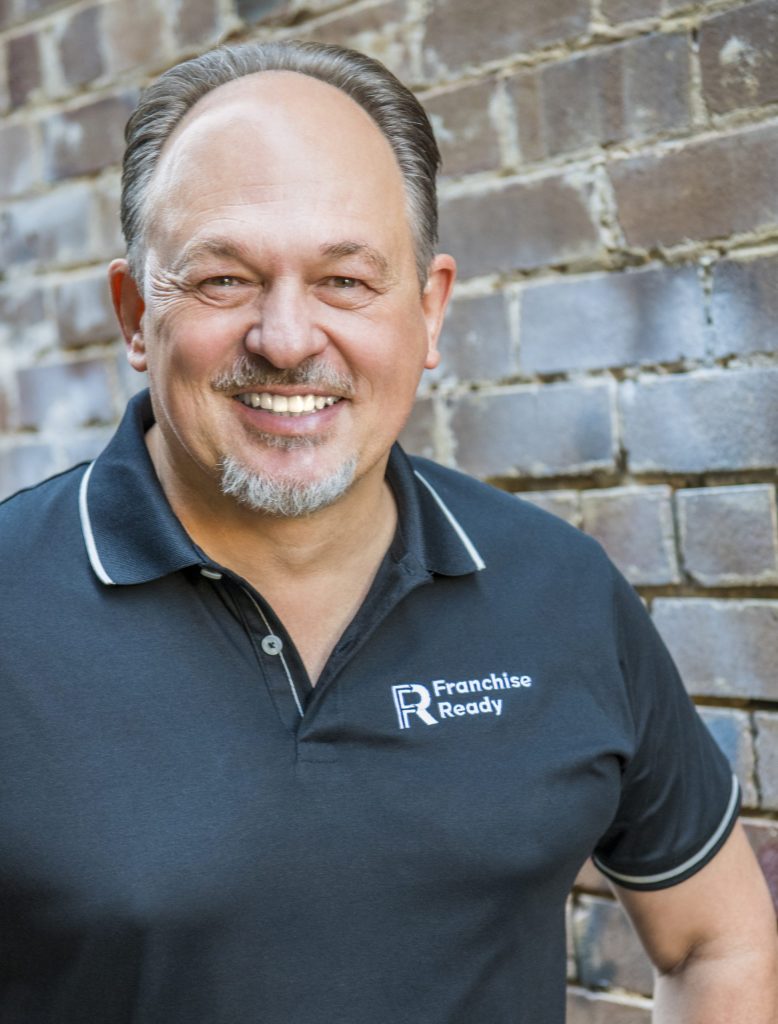
Doug Downer an experienced Franchising expert with an impressive 30+ year senior management history in developing and leading businesses within the Franchising sector. He has been recognized 5 time Top 30 Franchise Executives in Australia on four occasions and 5 time Global influencer in franchising on three occasions.
Doug owns three franchises as a franchisee and has owned 8 franchises as a franchisee, he has been responsible for the establishment of three of his own start-up franchise systems including all aspects from strategy through to market entry. Doug has operated at CEO and Director level in eight franchise systems. He also started and currently owns and operates five successful SME Businesses of his own, so he is well versed in all aspects of franchising.
Contact Doug at: [email protected] | Website: www.franchiseready.com.au