“All equipment included” is one of the more comforting phrases in a fitness franchise prospectus. It is also one of the most variable, and the gap between what a franchisee assumes it covers and what it actually covers tends to surface about three weeks before opening.
The major hardware is rarely the problem. Racks, machines and cardio are specified by the franchisor, priced into the package and delivered on a schedule.
The trouble sits in the margins. Accessories, consumables, replacement stock, installation logistics and ongoing servicing are frequently the franchisee’s line, and collectively they are not small.
Key Takeaways
- Franchise packages usually cover major equipment to brand specification, while accessories, consumables and replacements often sit with the franchisee.
- Member demand has shifted toward strength and free weights, which changes both floor plan and the accessory budget.
- Small-ticket items look trivial per unit and stop looking trivial once you multiply them by a club’s worth of stock and replacement cycles.
- Servicing is an operating cost with a rhythm, not a one-off event, and equipment downtime is a retention problem.
- Be careful what your staff claim about training aids, because overstated safety claims create avoidable exposure.
Where member demand actually moved
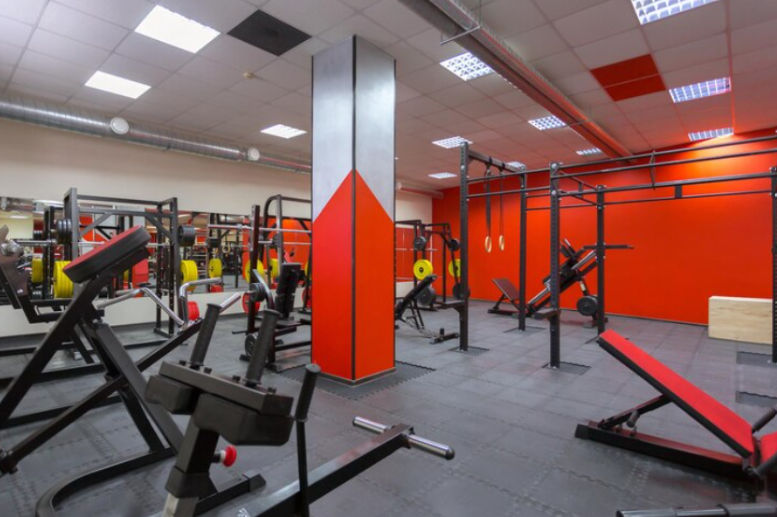
The cardio-dominant floor plan is no longer the default. Strength areas, free weights and functional space have absorbed a growing share of both floor area and member attention across most club formats.
That matters commercially because strength floors are denser in accessories. A row of treadmills needs power and servicing, while a strength floor needs belts, grips, bands, collars, storage, platforms and flooring rated for dropped load.
It also changes the staffing conversation. Free weight areas generate more member questions and more supervision requirements than a cardio row ever did.
Anyone weighing up the segment will find plenty of established commentary on fitness franchising and how the models compare. The equipment layer underneath those models is what tends to get less attention.
What the package covers, and what it usually does not
Read the equipment schedule as carefully as you read the territory clause. Franchisors specify major equipment tightly, because brand consistency across clubs is part of what you are buying.
One Australian 24-hour brand has published an initial investment range of $250,000 to $500,000 depending on premises size, with gym equipment included in the franchise cost. That is a genuine inclusion and it is also usually the major hardware rather than everything with a barcode.
The items most often left to the operator are accessories and consumables, replacement stock as things wear out, some flooring and storage decisions, and the servicing arrangement after any initial warranty period.
Ask three specific questions before signing. What exactly is on the equipment schedule, who pays for replacements in years one to three, and am I required to buy through a nominated supplier or free to source competitively.
Plan the floor before you order anything
Ordering equipment against a spreadsheet rather than a layout is a reliable way to end up with a rack you cannot legally position where you intended.
Clearances are the usual culprit. Racks need safe working space around them, deadlift platforms need drop zones, and egress paths have to stay clear regardless of how neatly the equipment tessellates on paper.
Flooring specification follows from the layout rather than the other way around. Rubber thickness under a drop zone is a different decision to rubber under a machine row, and retrofitting it after installation is expensive and disruptive.
This is where 3D layout services earn their fee. Seeing the floor rendered before anything ships catches the clearance and circulation problems while they are still a drawing rather than a delivered pallet.
Sequencing with the builder matters just as much. Power points, mirror positions, water lines and reinforcement for wall-mounted rigs all need to be locked in before the trades finish, and equipment suppliers who work on franchise fit-outs regularly will tell you what they need and when.
The small-ticket line that adds up
Here is the category that quietly escapes the spreadsheet. Individually these items are cheap, and that is exactly why they get estimated rather than costed.
A gym weight belt runs from roughly $35 for a velcro model to around $150 for a single-prong leather one at Australian suppliers. Stock a handful of sizes across a couple of constructions and you are already into four figures before adding grips, bands, collars and joint supports.
Then add the replacement cycle. Shared accessories in a 24-hour club take considerably more punishment than the same item in a home gym, and velcro, stitching and buckles are wear items rather than fixtures.
There is a revenue angle too, which is where some operators recover the cost entirely. Accessories are one of the few genuine retail lines a gym has, and members who are training seriously enough to want a belt generally prefer to buy their own rather than share one.
Worth asking suppliers about trade pricing as well. Several Australian equipment suppliers run discount programs for gym owners and trainers, which changes the maths on both stocked and resold stock.
Be careful what your staff claim
This one is less obvious and more consequential than it looks, particularly for an owner-operator with casual staff on the floor.
Lifting belts work by increasing intra-abdominal pressure and trunk stiffness, which can help a lifter move heavier loads. That mechanism is well documented and it is a reasonable thing to explain to a member.
What is not supported is the injury prevention pitch. When the US National Institute for Occupational Safety and Health reviewed the evidence on back belts, it found no support for the claim that wearing one improves back safety or reduces injury risk, and noted belts can create a false sense of security that leads people to lift more than they should.
The balanced position is that belts tend to improve lifting performance without meaningfully changing injury risk in either direction. Usefully, the research also does not support the common worry that regular belt use weakens the core.
Brief your team accordingly. A trainer telling a member a belt will protect their back is making a claim you cannot substantiate, and in a member injury dispute that conversation becomes relevant.
Servicing is an operating cost with a rhythm
New operators tend to treat maintenance as something that happens when equipment breaks. Established ones budget for it quarterly and schedule it around quiet periods.
The commercial logic is simple. A broken rack or a treadmill with an out-of-order sign is a visible signal to every member who walks past it, and visible neglect shows up in cancellation reasons.
Ask about local technician availability and parts holdings before you commit to a supplier. In regional locations especially, the difference between a two-day fix and a three-week wait is a supplier question rather than an equipment question.
Some suppliers bundle installation, servicing and maintenance with the original fit-out, which is worth pricing as a package rather than assuming you will sort it out later.
Cash flow at fit-out
Equipment lands as a large payment at precisely the point when you have paid the franchise fee, signed a lease, fitted out a premises and have no members yet.
Finance options exist and are common, and the question worth modelling is not simply lease versus buy. It is what your cash position looks like in month four, when the opening promotion has run its course and the membership base is still building.
Also model the replacement curve rather than ignoring it. Accessories and consumables turn over fastest, upholstery and cables next, and the frames themselves last far longer than either.
The bottom line
The headline equipment number in a franchise package is usually accurate and usually incomplete. The variance sits in accessories, replacements and servicing, which are the least glamorous parts of the budget and the ones most likely to be guessed at.
Cost them properly before you sign, ask who owns each line, and treat the accessory shelf as a small revenue opportunity rather than pure expense.
Get those three things right and the fit-out stops being the part of the launch that surprises you.
Frequently Asked Questions
Does a franchise fee normally include all gym equipment?
Often it includes the major hardware specified by the franchisor, but the scope varies significantly between systems. Read the equipment schedule line by line and confirm in writing who covers accessories, consumables and replacements in the first few years.
Can franchisees source equipment independently?
It depends entirely on the agreement. Many franchisors mandate suppliers for major equipment to maintain brand consistency, while leaving accessories and consumables more open. Ask before assuming either way.
How much should be budgeted for accessories?
There is no universal figure because it depends on club size and format, but the practical approach is to cost actual items and quantities rather than applying a percentage. Belts, grips, bands, collars and joint supports across multiple sizes add up faster than most first-time operators expect.
Are training accessories worth stocking for retail?
For many clubs, yes. Accessories are one of the few natural retail lines in a gym, margins are reasonable and members training seriously usually prefer their own gear to shared stock.
What should be checked before choosing an equipment supplier?
Local technician coverage, parts availability, warranty terms separated into parts and labour, whether installation is included, and whether they offer trade pricing. For franchise fit-outs, capability with custom branding and floor planning is also worth confirming.
How often does commercial gym equipment need servicing?
It varies by equipment type and usage volume, so follow manufacturer schedules and your supplier’s recommendations. The important shift is treating it as a scheduled operating cost rather than a reactive repair budget.