
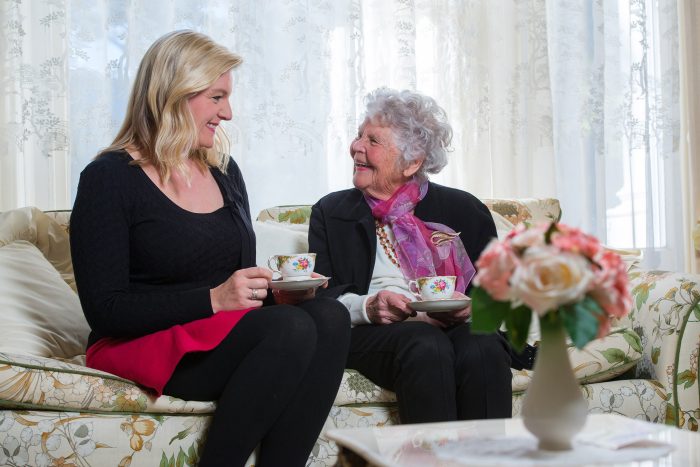
How focusing on delivering an uncompromising experience can help in-home care franchises deliver on their promises.
Every Australian deserves to age with dignity or live with a disability on their own terms, but the question isn't just about providing care, it's about delivering an experience that genuinely puts people at its heart. In a highly regulated, rapidly changing, and steadily growing sector, can empathy truly be systemised? The franchise model has the potential to be the ideal structure to achieve it.
Australia is witnessing a profound demographic shift. Over 4.4 million Australians, or 17% of the population, were aged 65 and over in 2023, a figure projected to rise to nearly 1 in 4 by 2050. This surge in the older population, coupled with a strong drive for ageing in place - with approximately 7 in 10 older Australians wanting to receive care in their own homes - has created an unprecedented demand for in-home aged care and disability services.
The statistics paint a clear picture of this growing need. As of March 2024, over 280,000 Australians were actively utilising Home Care Packages (HCPs), a 6% increase from the previous year. This growth aligns perfectly with government policy, which has seen the Australian Government commit an additional $2.2 billion to fund the aged care sector in the 2024–25 Federal Budget, including $531.4 million for an additional 24,100 Home Care Packages.
This rising demand is contrasted by a significant decrease in residential aged care providers (down 5.2% since FY22), presenting a unique challenge: how do we scale highly personalised, quality care services to meet this enormous, growing need, all while navigating complex government funding streams like the NDIS and Home Care Packages, and preparing for new initiatives like the "Support at Home" program launch in 2025?
This is where the franchise model emerges as a compelling solution. It offers a powerful blend of robust, centrally managed systems and deeply embedded local delivery. For successful brands in this vital space, the goal is to maintain uncompromising quality while allowing for the individuality and flexibility that clients desperately need. It's about taking the essential human element of care and empowering it through intelligent design, ensuring that every client genuinely experiences the right care, delivered how they want and need it.
The beauty of the franchise model in the in-home care sector lies in its dual capacity: the ability to build robust, scalable systems at the franchisor level, while, at the same time, empowering franchisees to deliver deeply personal, nuanced care at the local level. This symbiotic relationship is crucial for navigating the sector's complexities and ensuring service excellence - systemising empathetic care.
Alex Shaw, CEO and Founder of For Care, a company focused on providing in-home aged care and disability support, says the challenge and opportunity lie in staying agile amidst constant change. "Keeping up with changing regulations and legislation is paramount," Shaw notes. “As are agile and responsive business systems. But underpinning it all is keeping people at the heart of what we do.” Their franchise model is designed to allow those providing the services to focus on what they do best: delivering care. Although new to the franchising world, For Care brings nearly two decades of experience in delivering in-home care. The company’s mission is to support people to get the most out of life. “We want people to have choice and control in living a fulfilling, independent life they can enjoy,” says Shaw. “And for that to happen, we want the whole sector to flourish.” With this vision in mind, For Care is growing its services through franchising, with teams of highly skilled support and specialist carers attuned to the needs of customers in their local community, backed by an intelligent, supportive business model. This approach means that collaboration and partnership are key.
This top-down strategic guidance is echoed by Jewli Turier, Director of Growth at Dovida (recently rebranded from Home Instead Australia), and has the tagline ‘Your Life, Your Way’. Turier emphasises that while policies and processes are fundamental, they must always focus on what matters most: individuals' needs. “It can’t be cookie cutter,” she says. This proactive approach is vital in a sector subject to significant government changes and funding shifts. "You can’t be passive or wait for things to change," Turier asserts. "You must be proactive, advocating for clients and developing packages and levels of service that identify and prioritise their needs."
For Helen Whait, founder of ActivOT, which provides mobile occupational therapy services around the country, it’s all about creating a balanced operational model. She reiterates that “efficiency is crucial, especially in service-based industries where time and resources are precious, but the real magic happens when those systems are designed with flexibility and empathy baked in”. She encourages franchises who provide in-home services to consider that “empathy becomes a kind of system itself when it's embedded into the design of your model, in how you onboard, how you support decision-making, how you handle compliance, and even how you use technology. When done right, you’re not choosing between consistency and connection. The best franchise models allow for both.”
It’s at the local level, where franchisees operate, that these policies and visions translate into tangible care. This is where the true human touch of the brand comes to life. Jewli Turier highlights the indispensable role of local presence: "We have operations managers at the coal face, available to the community to answer questions and provide advice." This local embeddedness ensures that the brand promise is delivered with an intimate understanding of each client's unique circumstances.
This local delivery approach franchise models represent, goes beyond mere compliance. For Care’s Alex Shaw speaks of setting their own benchmarks: "We provide more than requirements – it's about delivering an uncompromising experience, setting your own standards." Jewli agreed that “commitment to going above and beyond minimum expectations is a cornerstone of building trust and reputation in a service where vulnerability is inherent”. So it's the local franchisee, empowered by the franchisor's commitment to excellence, that embodies the brand promise day in and day out and they need to be encouraged to challenge everything, even the systems and processes in place.
For successful brands in this space, communication is paramount, with a vital feedback loop from the field to ensure services remain truly client-focused. You need to collaborate and communicate with confidence, encouraging flexibility and proactivity from your franchise teams. Yes, there needs to be a systematic approach to running the franchise brand, but you also need inbuilt flexibility and feedback formed into standard operating procedures.
The bedrock of an uncompromising experience always returns to the human element. For Care, for instance, has recently launched an initiative to capture people's life stories in their homes – creating a lasting legacy document or recording for relatives, filled with cherished memories, family tales, and insights. This kind of initiative moves beyond physical care to truly enrich clients' lives.
Helen confirms that the best approach is to “focus on building frameworks that support franchisees to work in ways that reflect their own strengths, goals, and personal circumstances”. She suggests this might mean “tailoring business plans, adapting service delivery models, or finding ways to maintain a values-led culture at scale”. Her solution is to ensure that “the structure is there, but it’s not rigid. It flexes to support the individual, and ultimately, that flows through to the customer experience.”
Ultimately, when you empower your care team to be self-driven, accountable, and to take genuine ownership while adhering to systems and the brand's strategic direction, the result is more than just care - it’s a trusted, valued relationship, making the franchise model not only a viable option for the booming in-home care market, it's arguably the most effective.
A brand lives and dies by its reputation and for the in-home care sector, distinguished by its highly sensitive and personal approach, it's not just about meeting requirements, it's about consistently exceeding expectations with genuine empathy. This is an opportunity for franchise brands to truly shine as an ideal solution, provided both franchisor and franchisee are prepared to go the extra mile and blend systems with sensitivity.
Lauren Clemett is a Keynote speaker, International award-winning Neurobranding specialist and best selling author with over 25 years brand management experience. Lauren shares how to overcome overwhelm and lead with direction, purpose and meaning, making marketing your professional services a walk in the park!
www.yourbrandtruenorth.com